
Kitchen renovations account for nearly 35% of all home improvement projects, yet most homeowners base their design choices on trends that are already fading by the time construction begins. The kitchen you're planning right now could feel outdated before you even finish paying for it. This article reveals five specific design trends that will define kitchen spaces in 2026, giving you the advantage of planning ahead rather than catching up. You'll discover how sustainable materials like reclaimed wood and recycled glass countertops are becoming standard, not just trendy additions. We'll explore smart technology integration that goes beyond basic appliances to include voice-controlled lighting systems and AI-powered meal planning displays. The blend of modern functionality with traditional warmth is creating spaces that feel both cutting-edge and timeless. You'll learn practical implementation strategies for each trend, including budget-friendly alternatives and DIY approaches that can achieve professional results. We'll also cover when to call in experts versus handling projects yourself, helping you make smart financial decisions throughout your renovation. The focus on clean lines, natural elements, and functional design isn't just about aesthetics - it's about creating a space that adapts to how families actually live and work. Whether you're planning a complete overhaul or strategic updates, these insights will help you build a kitchen that stays relevant for years to come. Ready to discover which trends will transform your space and which ones you can achieve within your budget?
Sustainable Materials and Eco-Friendly Design
Bamboo flooring withstands decades of heavy foot traffic while releasing fewer harmful chemicals into your home's air than traditional hardwood options. The shift toward environmentally conscious kitchen renovations reflects growing awareness that material choices directly impact both indoor air quality and long-term durability. Homeowners are increasingly prioritizing sustainability in modern kitchen design, selecting recycled countertops, responsibly sourced cabinets, and low-VOC paints that contribute to healthier living environments.
The health advantages of choosing green building materials extend far beyond environmental responsibility. Formaldehyde-free cabinetry prevents respiratory irritation that affects millions of families living with conventional pressed wood products. Natural stone countertops eliminate the off-gassing concerns associated with some synthetic surfaces, while water-based finishes reduce volatile organic compounds that can trigger headaches and allergic reactions. These material selections create spaces where families can cook and gather without compromising their well-being.
Eco-Materials in Kitchen Design
Reclaimed barn wood transforms into stunning cabinet faces that carry decades of character while preventing perfectly usable timber from reaching landfills. Cork flooring provides natural antimicrobial properties and exceptional comfort underfoot, sourced from trees that continue growing after harvest. Recycled glass countertops offer unique visual appeal through embedded fragments of bottles and windows that would otherwise contribute to waste streams. Energy-efficient appliances featuring ENERGY STAR certification reduce utility costs by 10-50% compared to standard models while maintaining superior performance standards.
Salvaged materials bring authentic texture and history into contemporary kitchen designs without the environmental cost of new production. Reclaimed metal fixtures add industrial charm while diverting materials from scrap yards. Recycled plastic lumber creates durable shelving and trim work that resists moisture damage better than traditional wood products. These choices demonstrate that environmental responsibility enhances rather than limits design possibilities.
Benefits of Sustainable Choices
Eco-friendly materials aren't just good for the planet - they're durable, low-maintenance, and often cost-effective in the long run. Bamboo cabinet doors resist warping and cracking better than many hardwood alternatives while growing back to harvest size in just three to five years. Natural linoleum flooring lasts 40 years or more with proper care, compared to 10-15 years for vinyl alternatives. According to the 2026 Kitchen Trends Report from the National Kitchen & Bath Association, healthier, wellness-focused spaces and organic, earthy materials are among the key themes growing in popularity across kitchen projects.
The financial benefits compound over time through reduced replacement costs and lower energy bills. LED lighting systems consume 75% less energy than incandescent bulbs while lasting 25 times longer. Sustainable insulation materials improve temperature regulation, reducing heating and cooling expenses throughout the year. These investments pay dividends through decreased maintenance requirements and extended product lifecycles.
Starting with smaller sustainable swaps builds momentum toward larger environmental improvements while managing renovation budgets effectively. Replacing cabinet hardware with recycled metal options costs less than $200 while making an immediate visual impact. Installing low-flow faucets reduces water consumption by 30% without sacrificing functionality. Choosing locally sourced stone reduces transportation emissions while supporting regional businesses and craftspeople.
Smart Technology Integration
Voice-activated controls now respond to cooking commands while your hands remain busy chopping vegetables or kneading dough. Modern kitchens are becoming command centers where artificial intelligence anticipates your needs and streamlines daily meal preparation routines. Connected devices work together seamlessly, creating an ecosystem that learns from your habits and preferences to optimize cooking times, temperatures, and energy consumption.
Advancements in Smart Kitchen Features
"AI-driven integration is shaping the next generation" of culinary appliances, according to Simon Plumbridge, director at Gaggenau. Internal cameras monitor food progress without opening oven doors, while sensors detect moisture levels and adjust cooking cycles automatically. Smartphone compatibility allows remote monitoring and control, enabling you to preheat ovens during your commute home or check on slow-cooking meals from anywhere in your house.
Temperature regulation has become more precise through machine learning algorithms that analyze cooking patterns and environmental factors. Smart refrigeration systems calculate optimal storage conditions for different food types, extending freshness periods while reducing energy consumption. These advances transform basic appliances into intelligent assistants that adapt to your cooking style and dietary preferences.
Examples of Automation and Connected Appliances
The Samsung Series 7 Spacemax refrigerator uses AI technology to determine exact temperature requirements, maintaining food quality while minimizing energy usage. Multi-functional ovens combine air-frying, steam cooking, and microwave capabilities within single units, maximizing counter space efficiency. Smart dishwashers detect soil levels and adjust water pressure accordingly, while connected coffee makers prepare your morning brew based on programmed schedules.
"Appliances communicate with one another" through integrated networks that coordinate cooking processes, explains Plumbridge. Warming drawers activate automatically when oven programs finish, maintaining ideal serving temperatures without manual intervention. Induction cooktops sync with ventilation systems to adjust fan speeds based on cooking intensity, while smart lighting responds to activity levels throughout different meal preparation phases.
Enhancing Kitchen Functionality
Connected ecosystems eliminate guesswork from complex cooking techniques by providing real-time guidance and automatic adjustments. Recipe apps integrate directly with appliance controls, setting precise temperatures and timing sequences for optimal results. Voice assistants read cooking instructions aloud, convert measurements, and set multiple timers simultaneously during elaborate meal preparations.
"Smart refrigeration technology helping households extend freshness" addresses food waste concerns while improving meal planning efficiency, notes Tom Hopper from Miele. Inventory tracking systems monitor expiration dates and suggest recipes based on available ingredients. Electric food composters like the Lomi transform kitchen scraps into nutrient-rich soil amendments, completing the cycle from preparation to waste management.
Installing smart hubs creates centralized control points for managing multiple connected devices through single interfaces. Energy monitoring features track consumption patterns and suggest optimization strategies that reduce utility costs. These technological integrations inspire confidence in home cooks while achieving professional-level precision and consistency in everyday meal preparation.
Modern Meets Traditional Style
Homeowners are discovering that mixing sleek contemporary features with classic design elements creates kitchens that feel both current and timeless. This approach addresses the common concern that purely modern spaces can feel sterile or unwelcoming, while purely traditional designs may seem outdated. The fusion strategy allows families to enjoy cutting-edge functionality without sacrificing the warmth and character that makes a kitchen the heart of the home.
Kitchen renovations featuring this dual approach demonstrate remarkable versatility in achieving personal style goals. One successful integration pairs traditional shaker cabinet doors with minimalist hardware and quartz countertops, creating visual interest through contrasting textures rather than competing styles. Another effective combination features exposed brick walls alongside stainless steel appliances and geometric pendant lighting, where industrial elements soften the rustic backdrop. "Modern kitchens in 2026 are all about clean lines, smart layouts" that incorporate mixed materials strategically throughout the space. These examples prove that careful selection prevents either style from overwhelming the other.
Achieving this harmonious balance requires specific strategies that honor both design philosophies without creating visual chaos:
- Start with neutral base colors like white, cream, or soft gray for cabinets, then add personality through hardware finishes and accent materials
- Choose one dominant style for major elements like cabinetry, then incorporate the secondary style through lighting fixtures, backsplashes, or island details
- Mix textures thoughtfully by pairing smooth surfaces like marble with rough elements like reclaimed wood or natural stone
- Select appliances in consistent finishes to create cohesion between different design periods
- Use architectural details like crown molding or decorative brackets to bridge the gap between contemporary and traditional elements
- Incorporate vintage accessories or antique pieces sparingly to add character without overwhelming clean lines
Creating successful transitional spaces requires understanding that each element should complement rather than compete with surrounding features. "Cool grey cabinetry wraps around warm wood accents" to demonstrate how contrasting materials can work together when proportions remain balanced. The key lies in establishing a clear hierarchy where one style leads while the other supports, preventing the space from appearing confused or disjointed. This approach ensures that your kitchen feels intentionally curated rather than accidentally assembled from different design periods.
Natural Elements for Warmth and Comfort
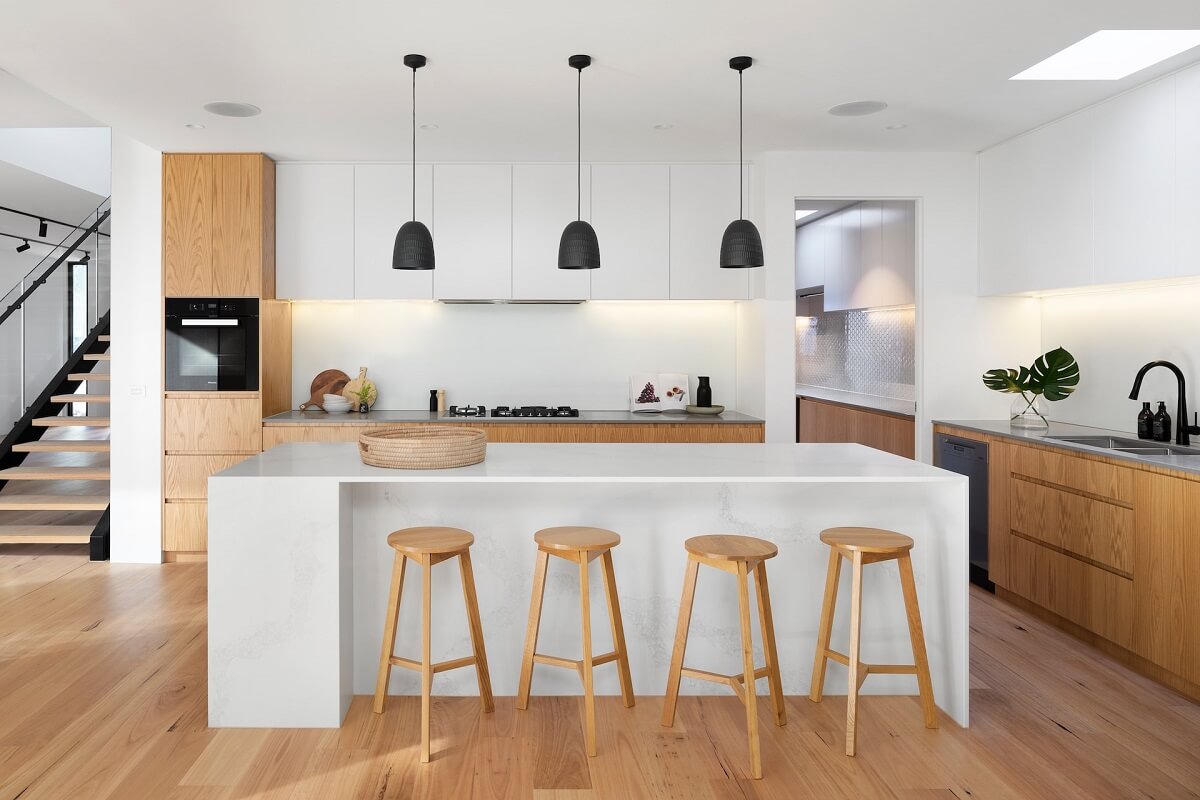
Raw timber beams stretched across kitchen ceilings create architectural drama while connecting indoor spaces to the outdoors through their organic texture and grain patterns. These structural elements anchor rooms with their substantial presence, making even expansive kitchens feel intimate and grounded. The warmth radiating from exposed wood contrasts beautifully with cooler surfaces like marble or granite, establishing visual balance that prevents spaces from feeling sterile or unwelcoming.
Stone backsplashes made from locally quarried materials bring geological history directly into daily cooking routines. Each piece carries unique mineral veining and color variations that machine-made tiles cannot replicate. Natural stone surfaces develop subtle patinas over time, gaining character through years of meal preparation and family gatherings. These authentic aging processes create depth that synthetic alternatives struggle to achieve, making kitchens feel established rather than recently constructed.
Skylights positioned above kitchen islands flood work surfaces with changing daylight throughout different seasons and weather conditions. Morning sun streaming through these openings transforms breakfast preparation into a more pleasant ritual, while afternoon light creates natural spotlights for detailed cooking tasks. The connection to outdoor conditions helps regulate circadian rhythms and reduces dependence on artificial lighting during peak daylight hours. Strategic placement of these openings frames views of sky and treetops, bringing nature's movement into static interior spaces.
One successful design approach combines live-edge walnut countertops with fieldstone accent walls and copper pendant fixtures suspended over dining areas. The irregular wood edges preserve the tree's original shape, creating conversation pieces that guests notice immediately. "The cooler grays that dominated for so long are giving way to mineral taupes, earthy off-whites, and gentle clay undertones," explains Katerina Tchevytchalova, director of K'Arte Design. These warmer base colors support the organic materials without competing for visual attention.
Another effective combination features reclaimed chestnut flooring paired with soapstone counters and wrought iron hardware throughout cabinet faces and drawer pulls. The aged wood planks show nail holes and weathering marks from their previous life in barns or factories, adding authentic character that new materials cannot duplicate. Hand-forged metal details echo traditional blacksmithing techniques while providing durable functionality for daily use.
Large windows positioned at sink locations transform dishwashing from a chore into an opportunity to observe seasonal changes in outdoor gardens or landscapes. These sight lines create mental breaks during kitchen tasks while maintaining connection to natural light cycles. The interplay between interior warmth and exterior views establishes a sense of place that makes kitchens feel rooted in their specific geographic locations.
Installing these organic elements requires careful attention to moisture management and proper sealing techniques that preserve their natural beauty while ensuring longevity. Wood surfaces need appropriate finishes that protect against water damage without obscuring grain patterns or texture details. Stone installations demand proper substrate preparation and sealing applications that prevent staining while maintaining the material's breathable properties.
Trending Colors and Textures
Caramel-toned cabinets paired with sage green islands are replacing the stark white kitchens that dominated previous years, signaling a major shift toward warmer, more inviting color schemes. "Moving beyond the cool grays of recent years, the color palette for 2026 is warming up considerably," with homeowners gravitating toward hues that create emotional connections rather than clinical perfection. These color choices reflect a deeper desire for spaces that feel nurturing and grounded, especially as kitchens continue serving as family gathering hubs throughout busy daily routines.
Terracotta backsplashes complement cream-colored cabinetry beautifully, while muted olive green lower cabinets create striking contrast when paired with lighter upper storage. The psychology behind these selections goes beyond mere aesthetics - warm colors stimulate appetite and encourage longer conversations around dining tables. Rust-colored accent walls provide dramatic backdrops for open shelving displays, allowing dishware and decorative items to pop against the rich background. "These earthy colors evoke a sense of comfort, stability, and connection to the natural world," making kitchens feel like sanctuaries rather than sterile workspaces.
Dusty blue cabinetry creates calming atmospheres that balance the energy of busy cooking activities, while jewel-toned islands serve as conversation starters that guests remember long after dinner parties end. "Deep, dramatic colors are making a powerful statement in kitchen design," transforming ordinary storage into architectural features that command attention. Emerald green lower cabinets anchored by brass hardware create sophisticated focal points, while sapphire blue pantry doors add unexpected personality to utilitarian spaces.
Brushed stone countertops introduce subtle irregularities that catch light differently throughout the day, creating visual movement that polished surfaces cannot achieve. Textured ceramic tiles installed in herringbone patterns add dimensional interest to backsplash areas without overwhelming adjacent smooth surfaces. Rough-hewn wood beams contrast beautifully with sleek appliance finishes, establishing dialogue between different material personalities within single spaces. These surface variations prevent monotony while maintaining sophisticated cohesion across large kitchen areas.
Woven rattan pendant shades soften the hard edges of granite countertops and stainless steel appliances, introducing organic shapes that balance geometric cabinet lines. Hammered copper sinks develop unique patinas over time, becoming more beautiful with age and use rather than showing wear. Linen-textured cabinet doors provide subtle grain patterns that complement rather than compete with natural stone veining. "Muted colors, like dusty blue and sage green, are particularly stunning in a matte finish," creating surfaces that invite touch while hiding fingerprints and daily wear marks.
Layering different surface treatments within single color families prevents spaces from appearing flat or one-dimensional. Matte cabinet faces paired with semi-gloss island finishes create depth through light reflection variations, while maintaining color harmony throughout the room. Polished brass hardware adds warm metallic accents that bridge the gap between painted surfaces and natural materials like marble or granite. "Jewel tones pair exceptionally well with warm metallic hardware, like brass or copper," creating rich combinations that feel both luxurious and approachable.
Combining rough and smooth textures requires careful attention to proportions and placement to avoid visual chaos. Start with one dominant texture as your foundation, then introduce contrasting elements in smaller doses through hardware, lighting fixtures, or accent materials. Mixing three different surface treatments within single sight lines creates optimal visual interest without overwhelming the eye or creating competition between elements.
Practical Tips for Budget-Friendly Renovations
Kitchen transformations don't require emptying your savings account to achieve stunning results that reflect current design trends. Smart homeowners discover that strategic updates deliver maximum visual impact while preserving financial resources for future home improvements. The key lies in identifying which changes create the most dramatic difference and which elements can wait for later phases of renovation.
Successful renovations focus on high-impact modifications that guests notice immediately upon entering your kitchen space. Cabinet hardware replacement transforms dated storage into contemporary focal points for under $300, while fresh paint applications can completely alter room atmosphere for less than $200 in materials. These foundational changes establish new design direction without requiring structural modifications or professional installation services.
Strategic planning allows homeowners to implement trending design elements without exceeding reasonable spending limits. The average cost to remodel a small kitchen ranges from $5,000 - $15,000 according to industry data, making careful prioritization essential for achieving desired outcomes within realistic budgets.
Here are specific approaches that deliver exceptional value while incorporating 2026 design trends:
- Paint existing cabinets in trending colors - Sage green or dusty blue cabinet faces cost $150-250 in quality paint and primer, transforming outdated wood finishes into contemporary statements that align with current color preferences
- Install peel-and-stick backsplash tiles - Natural stone-look adhesive tiles range from $3-8 per square foot, allowing DIY installation of textured surfaces that mimic expensive materials without professional labor costs
- Upgrade lighting fixtures - Pendant lights with woven textures or brass finishes start at $75 each, instantly modernizing spaces while adding warmth through natural material integration
- Replace cabinet pulls and knobs - Brushed brass or matte black hardware costs $4-12 per piece, creating cohesive design themes that connect different kitchen zones through consistent metallic accents
- Add open shelving - Reclaimed wood floating shelves cost $25-50 per linear foot installed, introducing organic textures while providing display space for dishes and decorative items
- Install under-cabinet LED strips - Energy-efficient lighting systems range from $80-150 for complete kitchen coverage, improving task illumination while reducing electricity consumption
- Refresh countertop edges - Laminate edge banding in wood-grain patterns costs $2-5 per linear foot, giving existing surfaces updated appearance without full replacement expenses
Determining when to tackle projects yourself versus hiring professionals requires honest assessment of skill levels and available time commitments. Cabinet painting demands patience and proper ventilation but saves $2,000-4,000 compared to professional refinishing services. Electrical work for new lighting fixtures requires permits and safety expertise that justify contractor expenses, typically ranging from $330 - $430 a faucet for professional installation. Plumbing modifications exceed most homeowner capabilities and should remain in professional hands to prevent costly water damage repairs.
Investing wisely means spending more on elements that receive daily use while economizing on purely decorative features. Quality faucets and cabinet hinges endure years of operation without failure, making higher upfront costs worthwhile investments. Decorative backsplash tiles and paint colors can change with future trends, making budget-friendly options sensible choices that allow flexibility for later updates.
Final Thoughts
The five kitchen design trends we've explored for 2026 represent more than just aesthetic choices - they're pathways to creating spaces that truly work for modern life. Sustainable materials like reclaimed wood and recycled countertops offer environmental benefits while reducing long-term costs. Smart technology integration transforms daily routines through voice-activated appliances and automated lighting systems. The blend of modern and traditional styles provides timeless appeal that won't feel outdated in a few years.
Clean lines paired with functional design maximize both beauty and practicality, while natural elements bring warmth that makes kitchens feel like genuine gathering spaces rather than sterile work zones. These trends address real needs - efficiency, sustainability, and comfort - making them valuable investments rather than fleeting fads.
The guidance on budget considerations and DIY versus professional installation helps you make smart decisions about where to spend and where to save. Resources like Houzz, Pinterest, and local design centers provide endless inspiration for adapting these trends to your specific needs and preferences.
Your kitchen renovation journey doesn't have to follow every trend perfectly. Select elements that speak to your lifestyle and budget. Maybe you start with sustainable materials and add smart features later, or perhaps you focus on achieving clean lines through better organization systems.
The knowledge you've gained here positions you to make confident decisions that will serve you well beyond 2026. Start planning your transformation by choosing one trend that excites you most, then build from there. Your dream kitchen awaits your action.
Check out this article next