
If you’ve thought about selling your home, you’ve probably asked (or at least wondered):
“What do you think my home is worth?”
It’s a completely natural question. But it also starts the conversation in the wrong place.
Not because value doesn’t matter—but because it assumes something that isn’t quite true.
It assumes that value is something we can know with certainty upfront.
That pricing is a prediction.
That my role is to give you a number and stand behind it.
In reality, before your home ever hits the market, there is no certainty.
There is only strategy.
A Better Question to Ask
The most important pricing conversation isn’t:
“What is my home worth?”
It’s:
“How do we want to engage the market?”
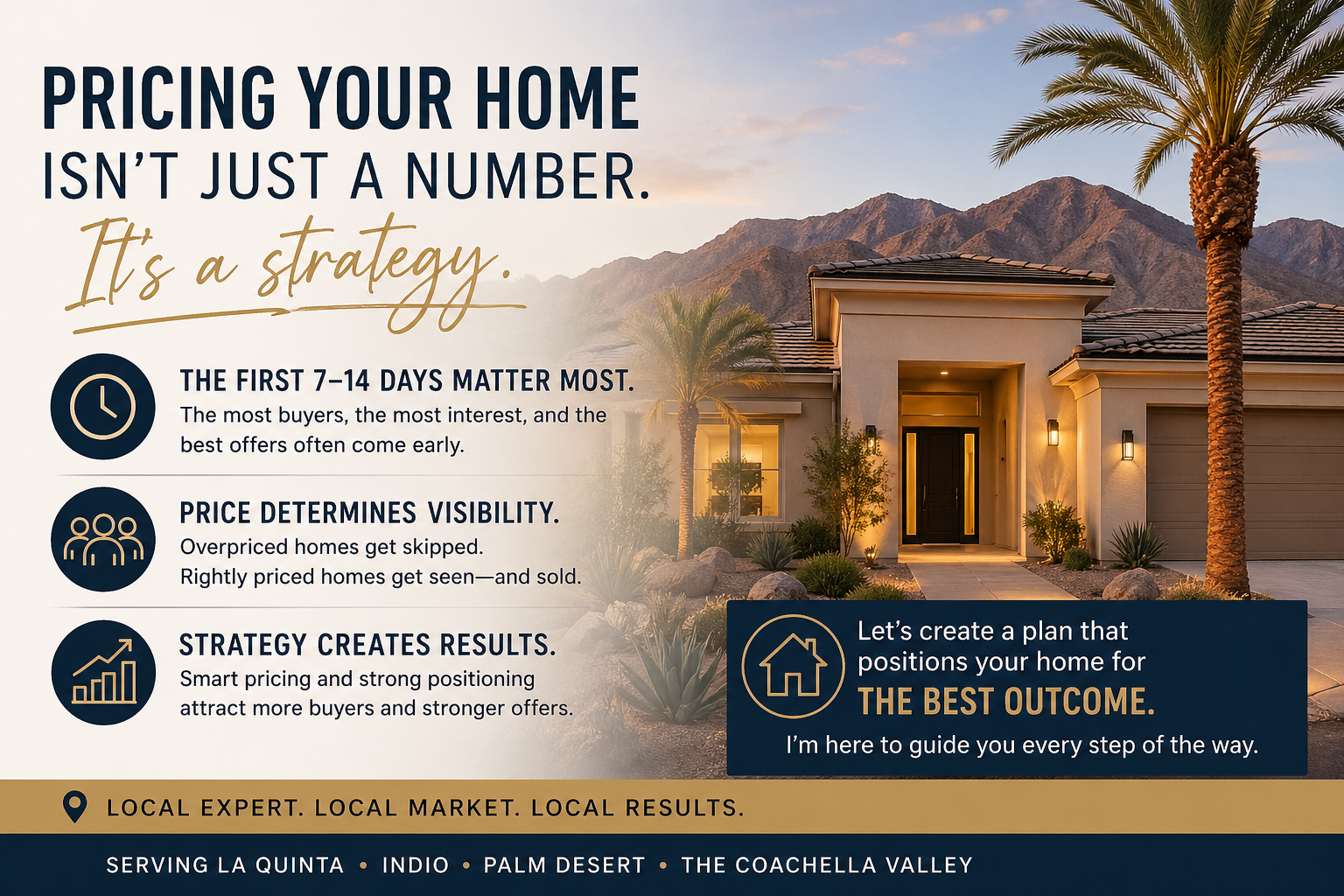
Because price isn’t just a number—it’s a positioning tool. It determines how buyers perceive your home, whether they engage with it, and ultimately how they respond.
And once your home is introduced to the market, something important happens:
The market gives us the answer.
The Market Moves Faster Than It Used To
Real estate hasn’t changed because homes are different.
It’s changed because information is different.
Today’s serious buyers are already in the market. They’re watching closely, often daily. When a home becomes available, they see it almost immediately. They evaluate it quickly. And they decide—just as quickly—whether it’s worth pursuing.
The market doesn’t take weeks to “discover” your home anymore.
It happens in days. Sometimes hours.
And that shift has created something I guide all my clients through carefully:
A critical early window where your home has the most attention, the most energy, and the highest probability of strong offers.
Why Pricing Is Really About Access
One of the biggest misconceptions I see is this idea of “pricing high to leave room to negotiate.”
It sounds reasonable on the surface.
But buyers don’t typically respond that way.
They don’t say:
“That’s overpriced—let’s go negotiate.”
They say:
“That doesn’t make sense—skip it.”
In other words, price doesn’t invite negotiation.
It determines whether your home even makes the list.
Pricing too high doesn’t create leverage—it often removes your home from consideration entirely.
Where the Best Outcomes Usually Happen
When a home is positioned correctly from the start, something powerful tends to happen:
- The largest pool of buyers sees it at once
- Emotional engagement is at its highest
- Resistance is at its lowest
That combination creates the environment where:
- Multiple buyers can emerge
- Competition can build
- Strong offers can come in early
This isn’t about rushing. It’s about alignment—making sure your home enters the market in a way that allows it to perform at its highest level.
My Role in This Process
My job isn’t to hand you a number.
And it’s definitely not to tell you what you want to hear.
It’s to help you think strategically about how your home enters the market, how buyers will perceive it, and how we position it to create the strongest possible outcome for you.
Sometimes that means having a deeper conversation.
Sometimes it means challenging assumptions.
But it always means keeping your goals at the center of the strategy.
If You’re Thinking About Selling
If this has you rethinking how pricing actually works, you’re not alone.
Most sellers haven’t been shown this side of the process.
If you’re even considering a move—now or down the road—I’m always happy to talk through your situation, your goals, and what the right strategy might look like for you.
No pressure. Just a thoughtful conversation.
Check out this article next